Why Are Roofing Nails Popping Up Through My Shingles?
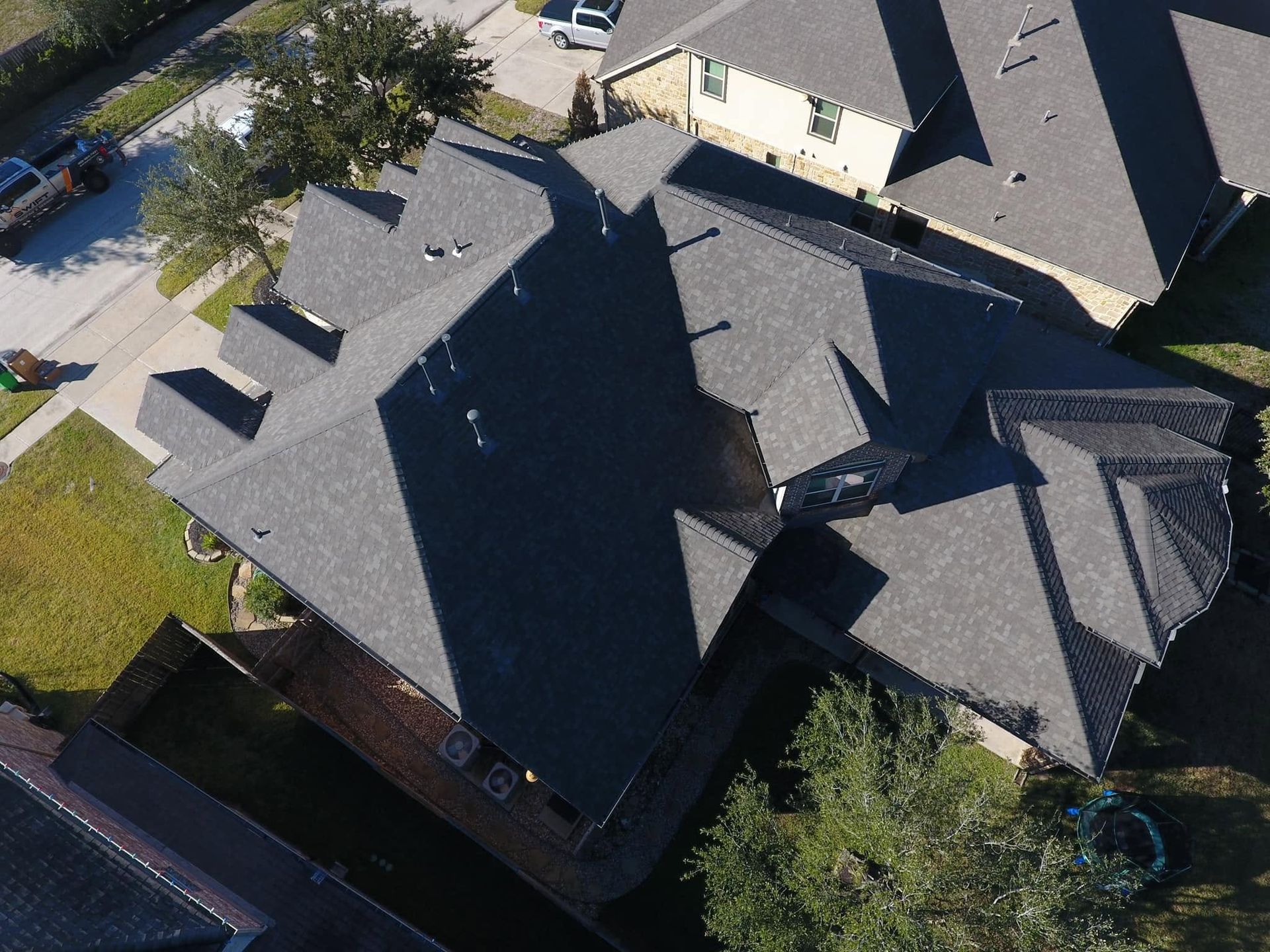
Walk around the exterior and look for:
- Missing or visibly lifted shingles
- Uneven rooflines
- Granules collecting heavily near downspouts
- Damaged flashing you can see safely from the ground
- Debris still sitting in valleys
- Gutters pulling away or holding water
Then check the attic or upper interior if safely accessible:
- Water stains on decking or rafters
- Darkened wood
- Damp insulation
- Daylight where it should not be visible
- Musty odor after rain
- Previous repair patches and where they were made
Our free roof inspection service includes shingles, flashing, decking, attic ventilation, drainage, and interior warning signs, with photo documentation so you can compare what you noticed with what the inspector finds.
| Inspection Result | Targeted Repair May Make Sense When | Larger Scope May Be Needed When |
|---|---|---|
| Hail damage | Limited, repairable damage is isolated | Impact damage is widespread across multiple slopes |
| Lifted shingles | Small number of compatible shingles can be repaired | Wind failure is widespread or shingles are brittle |
| Flashing failure | Detail can be rebuilt without disturbing large roof areas | Water has damaged surrounding decking or multiple transitions |
| Moisture intrusion | Entry point is isolated and decking remains sound | Decking, insulation, or multiple roof areas are affected |
The better approach is to combine age with condition, repair frequency, storm history, and moisture findings. Our article on four roof inspection findings that lead to bigger repairs explains why lifted shingles, failed flashing, hail damage, and hidden moisture should be judged by how they are progressing, not only by how old the roof is.
Ask these questions before accepting either recommendation:
- What exact condition makes restoration possible or impossible?
- Is the decking sound?
- How many slopes are affected?
- Is there hidden moisture?
- Are the existing shingles flexible enough to work around safely?
- What repairs must happen before restoration?
- How much useful life are we realistically trying to gain?
- If we restore now, what would still trigger replacement later?
Those questions turn a sales estimate into a roof-condition discussion.
What Does Restoration vs. Replacement Cost in North Texas?
For estimated market context, asphalt shingle replacement in North Texas is commonly planned around $300 to $600 per roofing square installed, with one roofing square equal to 100 square feet of roof surface. For broader planning context, a typical Texas roof replacement can fall in the $8,000 to $20,000 range, depending on roof size, material, pitch, design complexity, access, and the amount of work required once the existing system is opened up.
Those numbers are useful for early budgeting, but they should be treated as planning ranges rather than a price for a specific home. Roof surface area is different from living square footage because pitch, overhangs, garages, porches, valleys, and roof geometry all change the actual amount of roofing material and labor involved.
Homeowners can collect useful information without climbing onto the roof. Use binoculars or a phone camera from the ground, and inspect the attic or interior only where access is safe. Wet roofs, steep slopes, and hidden weak decking make rooftop inspection a job for trained professionals.
What to Check From the Ground
- Shingle tabs that appear missing, raised, shifted, or visibly damaged
- Flashing that looks bent or separated from adjacent materials
- Debris concentrated in roof valleys or behind penetrations
- Sagging gutter sections, disconnected downspouts, or water marks on fascia
- Tree branches touching the roof or broken limbs resting on it
- Uneven roof planes or a localized dip that was not present before
What to Check Inside the Home or Attic
- New stains on ceilings, walls, rafters, or roof decking
- Damp insulation or a musty odor after rain
- Daylight showing through an unexpected opening
- Rust around fasteners, vents, or metal components
- Peeling paint near the ceiling line or around penetrations
When to Request Professional Help
Write down when each sign appears, and take photos from the same position for future comparisons. If you see an active leak, significant displacement, or storm debris, move belongings away and request professional help rather than attempting a rooftop patch.
After a storm, the same checklist can help you describe what happened, but visible damage may represent only part of the condition. Swift Roofing & Designs offers storm-damage inspections when wind or hail is the likely cause. For an active opening or urgent water entry, emergency roof repair may be the safer route.
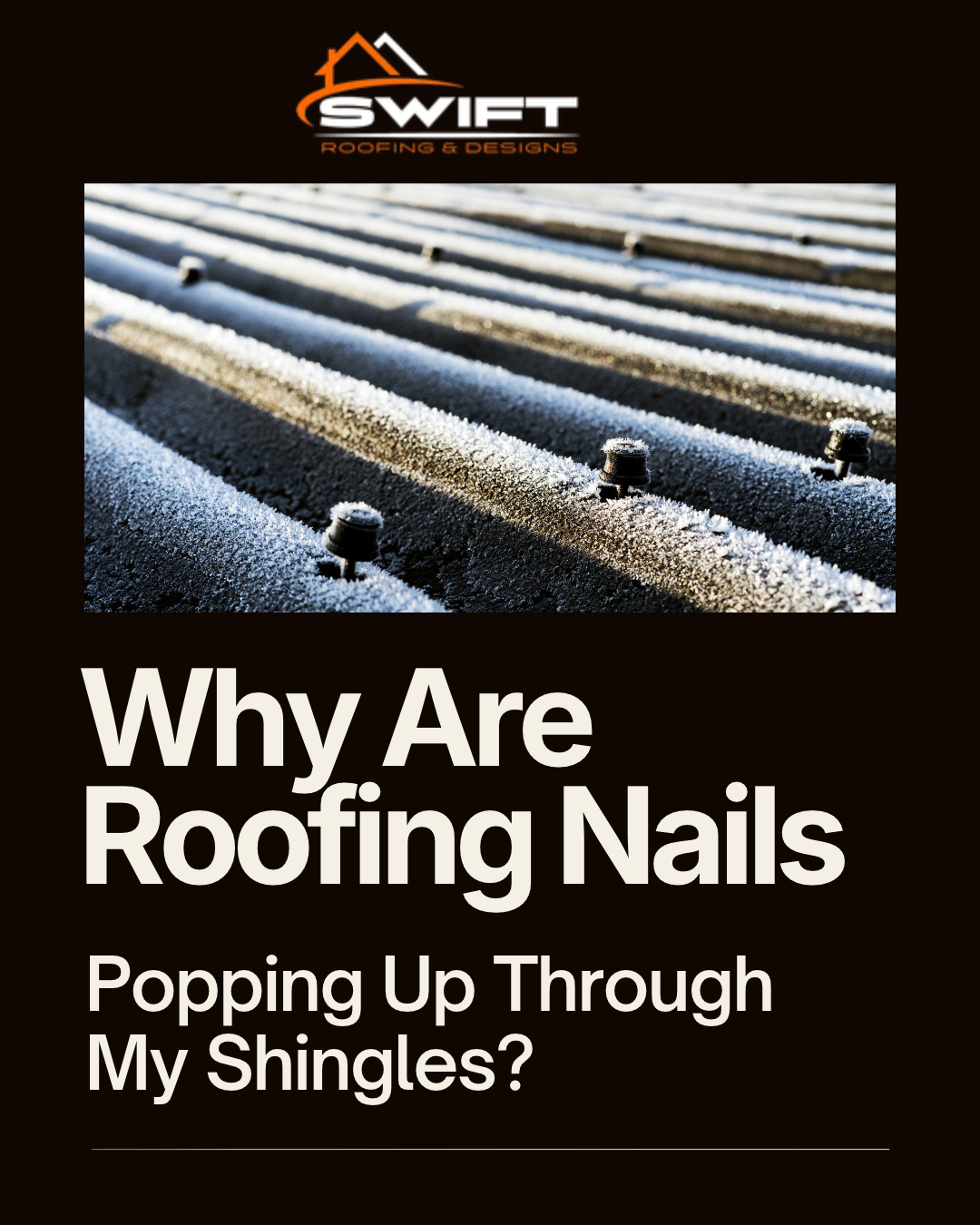
Roof nail pops happen when a roofing fastener rises or remains too high beneath the shingle above it. The resulting pressure can create a small bump, lift part of a shingle, or eventually push a nail head through the surface. Deck movement and fastening problems can contribute, but the appearance alone does not establish the cause. A raised nail deserves inspection, even when you have not noticed a ceiling leak.
At Swift Roofing & Designs, we help homeowners in Royse City and surrounding North Texas communities understand what their roof actually needs. A few localized fastener defects may be repairable, while a repeated pattern can warrant a broader evaluation of the installation and decking. We inspect the surrounding materials before recommending a scope. Here is what homeowners should know before treating a nail pop as either harmless or a sign that the entire roof has failed.
What Does a Roof Nail Pop Look Like?
A nail pop may appear as a small raised spot rather than an obvious piece of exposed metal. The shingle can look tented at one point, with a concentrated bump that interrupts an otherwise flatter surface. In other cases, the fastener has already broken through and the head is visible. Lighting, roof height, and shingle texture can make these details difficult to distinguish from the ground.
General roof waviness is a different observation because it may extend across several shingles or follow a broader line. Our guide to why a roof looks wavy or uneven covers that wider appearance problem. A localized bump and a broad ripple can exist on the same roof, but one should not be used to diagnose the other. We look at the fasteners and supporting materials to determine what is actually creating the raised area.
| What you notice | What it might indicate | What an inspection needs to confirm |
|---|---|---|
| One concentrated bump beneath a shingle | A raised fastener or another localized obstruction | Whether a nail is contacting the upper shingle |
| Visible nail head through the surface | An exposed fastening defect or puncture | Condition of the hole, fastener, and surrounding material |
| A raised shingle edge | A fastening, sealing, or other shingle issue | Whether the shingle is secure and properly sealed |
| Ripples across several courses | Broader unevenness rather than one nail pop | Underlayment, decking, and installation conditions |
| A dip in the roofline | A potentially more significant supporting-material concern | Whether prompt structural evaluation is needed |
Why Do Roofing Nails Rise in the First Place?
A roof nail needs suitable supporting material and appropriate installation to hold the shingle securely. A fastener that was left high, placed poorly, or driven into a location with inadequate holding capacity may not perform as intended. Movement in the roof assembly can make an existing weakness more noticeable over time. The question is therefore not simply why the nail moved, but whether the original fastening and the surrounding deck remain sound.
GAF's technical bulletin on improperly driven nails explains that underdriven nails can develop into nail pops as decking expands and contracts. It also distinguishes nails left high from those driven too deeply or at an angle. Those are different defects, even though several can affect the same roof. An inspection should identify the actual condition instead of assuming every visible fastener has backed out for the same reason.
Can Moisture and Seasonal Changes Make the Problem Worse?
Changes in temperature and moisture conditions can affect the materials that support a shingle roof. If a fastener already has poor anchorage, movement may expose a problem that was not obvious earlier. That does not mean a cold night created every raised nail you can see. Installation history, roof age, material condition, and the pattern of defects all belong in the assessment.
For homeowners in Rockwall, Fate, and Heath, preparing for winter is a useful opportunity to address visible weaknesses before another period of rain. However, the repair recommendation should come from inspection findings rather than the season alone. If attic moisture is also present, our guide to roof leaks versus attic condensation explains why the source needs separate investigation. Correcting one raised nail will not automatically solve an unrelated moisture problem inside the roof assembly.
Can Roof Nail Pops Cause Leaks or Wind Damage?
A protruding fastener can damage the shingle above it or interfere with how that shingle lies against the roof. GAF identifies punctures, separation from the self-sealant, and increased vulnerability to wind-related shingle loss among the consequences of underdriven nails. These conditions create reasons for repair, but they do not prove that water has already reached your interior. The surrounding shingle condition and the presence of an actual opening matter.
A roof can also have a localized defect before a homeowner sees a stain. Waiting for indoor evidence means relying on a later symptom to decide whether an exterior problem deserves attention. Our roof repair services begin with evaluating the cause and affected materials rather than simply covering a visible mark. If there is an active leak, tell us where it appears and whether it changes with rainfall or wind direction.
What Can You Safely Check From the Ground?
You do not need to climb onto the roof to make an inspection request useful. From a safe ground-level position, note the approximate location of a raised spot, any missing shingles, and whether the area seems to have changed. Photograph what you can see without using a ladder or leaning from an upper window. A photo can help explain your concern, but it cannot establish the condition of a concealed fastener.
Inside the home, record new stains, drips, or damp areas without touching wet electrical fixtures or entering an unsafe space. Avoid walking through an attic with uncertain footing, especially where insulation conceals the framing. If a ceiling is bulging or water is near electrical equipment, keep clear of that area and seek appropriate urgent help. Give the inspector your observations and let the roof-level investigation determine whether the nail pop is related.
Useful information to share when booking
- Where the raised area appears on the roof and when you first noticed it.
- Whether you can see metal, a puncture, a lifted tab, or only a small bump.
- Whether an interior stain appeared during a particular storm.
- The approximate roof age, if known, and any recent repairs.
- Whether the same concern has been repaired before.
- Any change that appears to involve multiple areas rather than a single spot.
Do not press on a suspected nail pop or try to determine whether the decking feels soft by stepping on it. Those checks require roof access and may damage already compromised materials. A ground-level view is enough to start a conversation about the next step.
What Will a Roofer Inspect Around a Popped Nail?
The assessment should consider the raised fastener, the shingle above it, and the materials that give the fastener its holding strength. Relevant questions include whether the shingle has been punctured, whether its seal has been disturbed, and whether nearby fasteners show a similar pattern. The inspector should also consider evidence of moisture or deterioration where access and conditions allow. The goal is to understand the repair boundary before treating the visible spot.
Owens Corning's fastening guidance emphasizes correct nail selection, placement, penetration, and driving method for the installed shingle product. Those requirements are why a repair should follow applicable product instructions rather than a universal hammer-and-caulk routine. We use roof inspections to document findings and explain whether targeted repairs or additional evaluation are appropriate. Ask to see photos that connect the recommendation to the condition found on your roof.
| Inspection area | Question to resolve | Why it affects the repair |
|---|---|---|
| Fastener | Is it high, displaced, angled, or otherwise improperly installed? | Different fastening defects require different corrections |
| Upper shingle | Is it punctured, torn, or still serviceable? | Damaged material may need replacement |
| Sealing area | Is the shingle lying and sealing as intended? | Fastening and weather protection work together |
| Supporting deck | Is the fastening location suitable and sound? | A new fastener needs reliable holding material |
| Nearby roof area | Is the issue isolated or repeated? | The pattern helps determine inspection and repair scope |
Why Is Covering the Nail With Caulk Often Incomplete?
A surface covering does not by itself restore the holding strength of a loose fastener. It also cannot establish whether the upper shingle has been damaged or whether the deck remains suitable. A patch may hide the visible symptom while leaving those questions unanswered. That is why the condition underneath deserves attention before the homeowner accepts a repair as complete.
A durable approach addresses fastening, any opening left behind, and the condition and sealing of affected shingles using the installed product's requirements. Depending on the findings, the roofer may need to correct the fastener and replace damaged material rather than reuse everything in place. Our article on roof repair mistakes that cost more over time explains why treating symptoms can lead to repeat work. Ask what the proposed repair corrects beneath the surface and how the finished area will be checked.
Should You Monitor, Repair, or Consider Replacement?
One nail pop does not automatically mean the roof needs replacement. Start with an inspection to distinguish an uncertain visual mark from a confirmed fastening defect. Monitoring is appropriate only when the assessment finds no repair-worthy defect or after a completed repair, with clear follow-up instructions. An exposed nail, punctured shingle, or active leak should not be left untreated simply because the rest of the roof looks acceptable.
A localized repair may make sense when the surrounding shingles remain serviceable and the deck provides suitable holding capacity. Broader work deserves consideration when repeated fastening failures, widespread deterioration, or compromised supporting materials make spot repairs unreliable. Homeowners in Greenville, Terrell, and Forney should be able to compare that recommendation with photos and a written explanation of the findings. We explain what a smaller repair can address, what it cannot address, and why replacement would or would not be appropriate.
| Decision | Findings that support it | Next step |
|---|---|---|
| Monitor after inspection | The raised appearance is not a fastening defect, there is no opening or loose shingle, and the inspector identifies no needed repair | Keep the inspection record and follow the recommended recheck plan |
| Schedule a targeted repair | One or a few confirmed defects, serviceable adjacent shingles, and sound supporting material | Correct the fastening issue and affected shingles using applicable product requirements |
| Investigate a larger repair | Repeated defects in a limited area, suspected deck deterioration, or recurring leaks | Establish the affected area and price the work needed beyond individual fasteners |
| Evaluate replacement | Widespread defects and material deterioration make localized repair impractical or unreliable | Compare a documented replacement scope with the limitations of further repair |
| Request prompt help | Active water entry, missing shingles, or a significant change in roof shape | Report the symptoms, avoid unsafe areas, and arrange timely assessment |
How Much Could Roof Nail Pop Repair Cost?
We price the work after checking the affected fasteners, shingles, access, and supporting materials. For a general budgeting reference, HomeGuide's 2026 roof repair cost guide lists 150–1,000 for minor repairs and 1,000–3,000 for moderate repairs nationally. Those categories cover a variety of roof problems rather than a fixed rate for each popped nail. Your written estimate from us will reflect the repair your roof needs, including any damaged shingles or decking identified during inspection.
A limited fastening correction can involve different work from repairing several punctured shingles or opening an area with water-damaged decking. Roof height, pitch, safe access, material compatibility, and the number and distribution of defects also affect the scope. Ask whether the estimate includes shingle replacement, sealing, disposal, and documentation, along with how concealed damage would be handled. Compare complete repair plans rather than multiplying a guessed price by the number of nail heads visible from the ground.
| Decision | Findings that support it | Next step |
|---|---|---|
| Monitor after inspection | The raised appearance is not a fastening defect, there is no opening or loose shingle, and the inspector identifies no needed repair | Keep the inspection record and follow the recommended recheck plan |
| Schedule a targeted repair | One or a few confirmed defects, serviceable adjacent shingles, and sound supporting material | Correct the fastening issue and affected shingles using applicable product requirements |
| Investigate a larger repair | Repeated defects in a limited area, suspected deck deterioration, or recurring leaks | Establish the affected area and price the work needed beyond individual fasteners |
| Evaluate replacement | Widespread defects and material deterioration make localized repair impractical or unreliable | Compare a documented replacement scope with the limitations of further repair |
| Request prompt help | Active water entry, missing shingles, or a significant change in roof shape | Report the symptoms, avoid unsafe areas, and arrange timely assessment |
What Should the Repair Estimate and Follow-Up Explain?
A helpful estimate describes the affected area and the work needed to correct it. It should distinguish fastener correction from shingle replacement, deck work, and any additional investigation that cannot be scoped until materials are exposed. Ask how hidden damage would be documented and discussed before the scope changes. Comparing those details is more useful than comparing two prices attached to the same vague phrase, roof repair.
After the work, keep the photos and scope with your home-maintenance records. If the original concern included a ceiling stain, ask how to distinguish remaining discoloration from new moisture after later rain. A new drip or recurring raised area deserves follow-up rather than another unexamined surface patch. Routine observation from the ground can help you report changes without turning roof maintenance into a risky DIY inspection.
Frequently Asked Questions
Are roof nail pops normal as a roof gets older?
They can occur on aging roofs, but that does not make them a condition to ignore. Fastening problems and deck movement can affect roofs of different ages. We inspect the surrounding roof before deciding whether the concern is isolated or part of a wider pattern.
Can a nail pop cause a leak even if the hole looks tiny?
A puncture or disturbed shingle can create a potential water-entry point, although appearance alone cannot confirm an active leak. Water exposure and surrounding materials affect what happens next. Our roof repair assessment checks the affected area instead of waiting for a ceiling stain to prove there is a problem.
Can I just hammer a popped roofing nail back down?
We do not recommend climbing onto your roof or hammering through the visible shingle surface. You may damage the upper shingle or leave an underlying anchorage problem unresolved. The correct response depends on the fastener and material condition, along with the installed product's repair instructions.
Are nail pops caused by freezing weather?
Not necessarily. Seasonal movement can expose existing fastening weaknesses, but installation and supporting-material conditions also matter. A winter inspection should investigate the actual cause rather than assume a recent freeze explains every raised area.
Will Swift Roofing & Designs recommend replacement for a few popped nails?
A few visible defects do not automatically establish a need for replacement. We assess repairability, surrounding shingles, and any broader concerns before explaining the options. Our recommendation should be supported by what the inspection finds, with photos that help you understand the scope.
How do I schedule an inspection for suspected roof nail pops?
Request a free roof inspection and describe the raised shingles, exposed nails, or leak symptoms you have noticed. We serve Royse City and nearby North Texas communities, including Rockwall, Fate, Heath, Greenville, Terrell, and Forney. Share photos taken safely from the ground if you have them, and leave roof access to the inspection team.
Get Clear Answers About Raised Nails and Shingles
If you have noticed roof nail pops, we can help you understand the condition before it becomes a larger concern. Our inspection looks beyond the visible bump to assess surrounding shingles and signs that the scope may extend farther. We document what we find and explain the appropriate next step. Whether the result is a targeted repair or a recommendation for additional work, you should understand the reason behind it.
Swift Roofing & Designs serves Royse City and surrounding North Texas communities with roof inspections and repair services. Tell us where you noticed the problem and whether there are any active leaks or recent changes. You do not need to climb onto the roof or attempt a patch before contacting us. Request your free roof inspection so we can evaluate the raised fasteners and discuss a repair plan based on your roof's condition.
Helpful Services and Related Reading
Request a Roofing Quote
Blog Form
We will get back to you as soon as possible.
Please try again later.
More Posts Like This:
Choose Swift Roofing & Designs for Top Quality Roofing
Need a reliable roofer? We've helped countless clients protect their homes while saving time and money, and we’re ready to help you next.