Black and white house icon with roof, chimney, and round window.

How North Texas Summer Heat Affects Your Roof's Longevity

April 16, 2026

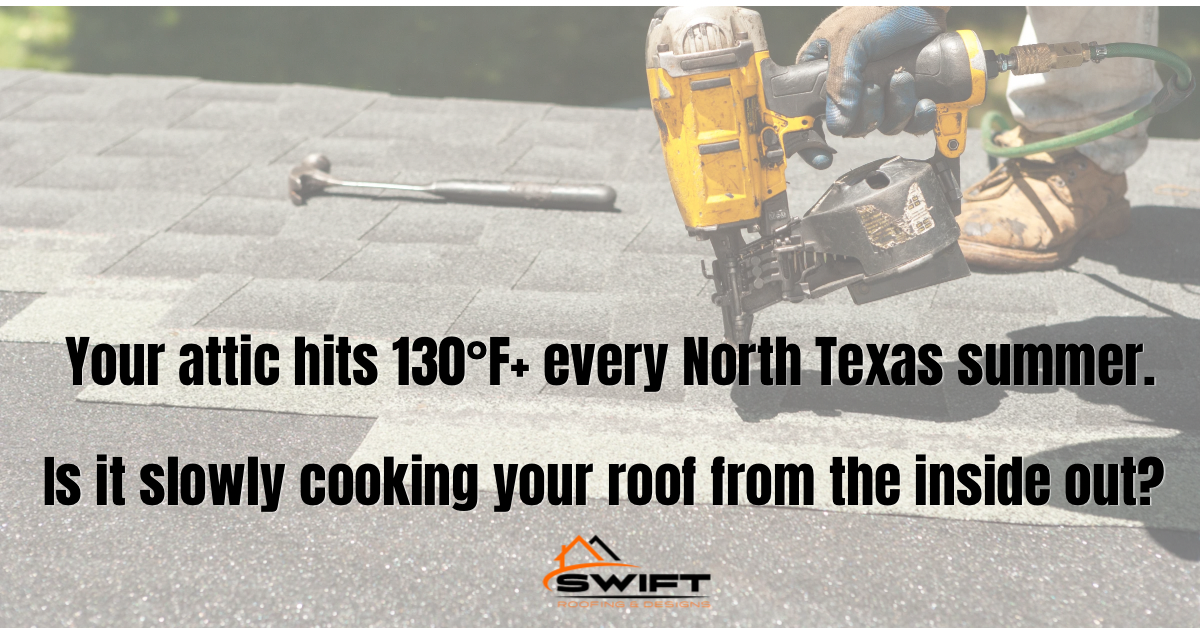
Most Rockwall and Royse City homeowners think about their roof twice a year — when hail season arrives in spring and when a storm rolls through in summer. But the damage that quietly shortens roof lifespans in North Texas isn't the dramatic hail event everyone sees coming. It's the relentless, compounding heat that works on your roof every single day from June through September. Surface temperatures above 150°F. Attics pushing 130°F or higher. UV radiation breaking down asphalt chemistry while thermal shock cycles stress every seal and joint on the roof. By the time fall arrives, your roof has absorbed months of heat damage — and most of it is invisible from the ground. Swift Roofing helps Rockwall and Royse City homeowners understand what's actually happening up there and what to do about it.

Why North Texas Summers Are Uniquely Destructive to Roofing Materials

North Texas heat creates a specific combination of roof-damaging conditions that most other parts of the country don't experience at the same intensity or duration:

Destructive Factor What It Does to Your Roof
Thermal shock cycling Daytime roof surface temperatures regularly exceed 150°F — followed by rapid overnight cooling. This daily expansion and contraction cycle cracks materials, breaks seals, and fatigues every structural connection on the roof
Intense UV radiation High UV levels in North Texas break down the chemical composition of asphalt shingles — causing brittleness, granule loss, and accelerated aging that shortens effective lifespan by years
Sustained extreme heat Extended exposure above 100°F softens asphalt, weakens wood decking, and hardens sealants — all at the same time
Sealant and flashing degradation The specialized sealants around vents, chimneys, and penetrations harden and crack in sustained heat — creating water infiltration points that don't show up until the next rain event

Material-specific heat impact:


  • Asphalt shingles — become soft and curl, blister, and shed granules at an accelerated rate
  • Metal roofing — can buckle and warp under extreme temperature differentials if not properly fastened and coated
  • Wood shakes — dry out, warp, and split from sustained exposure — particularly on south and west-facing slopes


The result: a roof that should last 25 years in a temperate climate lasts 15 to 20 in North Texas conditions — unless it's properly maintained, ventilated, and inspected after heat season.

What Summer Heat Actually Does to Asphalt Shingles

Understanding the degradation sequence helps Rockwall and Royse City homeowners recognize what's happening before visible damage appears:


Step 1 — Oil evaporation and drying Asphalt shingles contain oils that keep them flexible and resistant to impact. North Texas summer heat causes these oils to evaporate — leaving shingles progressively more rigid and brittle with each passing season.


Step 2 — Brittleness and thermal stress Without their oil content, shingles lose flexibility. The daily cycle of 100°F+ temperatures followed by overnight cooling causes constant expansion and contraction — stressing already-brittle material until it begins to crack and curl.


Step 3 — Granule loss Heat weakens the adhesive that bonds protective mineral granules to the shingle surface. These granules are the shingle's primary defense against UV radiation — once they're gone, the exposed asphalt beneath degrades at dramatically accelerated rates. Granule accumulation in gutters is often the first visible evidence this process is underway.


Step 4 — Blistering and buckling Trapped moisture and gases inside the shingle expand during intense heating — forcing their way to the surface as blisters. When these blisters pop they leave circular bald spots where granules have flaked off — direct UV exposure accelerates the timeline from there.


Step 5 — Structural weakening As shingle mats weaken from oil loss, granule exposure, and blistering — the roof's ability to shed water is progressively compromised. Dark asphalt exposed by granule loss absorbs more heat, accelerating the entire degradation cycle in those areas.


✏️ This five-step degradation sequence is a strong featured snippet candidate for "what does heat do to asphalt shingles."

How Attic Heat Buildup Destroys Roofs From the Inside Out

This is the most underappreciated roof killer in North Texas — and the one most homeowners never address because it's invisible from the outside.


When outside temperatures reach 95°F in Rockwall and Royse City, attic temperatures regularly exceed 130°F to 150°F in homes without proper ventilation. Here's what that heat does:


Bakes shingles from underneath The extreme attic heat reverses the installation process — breaking down asphalt chemistry and adhesive bonds from the underside while UV radiation attacks from above. Shingles caught between these two heat sources age dramatically faster than their rated lifespan.


Causes structural damage to roof decking High heat combined with trapped moisture causes wooden rafters and decking to warp, sag, and gradually rot — creating the underlying structural weakness that eventually leads to visible roofline sagging and shingle failure.


Traps moisture and creates mold conditions Without adequate airflow, humidity from normal household activity gets trapped in the attic. Combined with heat, this creates conditions for mold growth, insulation degradation, and wood rot that spreads silently for years before visible signs appear inside the home.


Increases energy costs significantly Scorching attics force HVAC systems to work dramatically harder — particularly during the peak of North Texas summer. Proper attic ventilation doesn't just protect your roof — it directly affects your monthly energy bills.


Signs your roof is being damaged from within:


  • Wavy, cupped, or uneven shingles across the entire roof surface
  • Musty odors inside the home — particularly in upper floors or near attic access
  • Unexplained increases in cooling costs during summer months
  • Peeling paint or rotting wood visible on fascia or soffits


The ventilation solution: A balanced ventilation system — intake vents at the soffits pulling cool air in, exhaust vents at the ridge letting hot air escape — prevents the heat trap that destroys roofs from within. If your Rockwall or Royse City home doesn't have this balance, every summer compounds the damage.

Summer Heat + Hail Damage — Why the Combination Is So Destructive

North Texas homeowners understand hail risk — but most don't realize that a roof degraded by summer heat takes dramatically more hail damage than a properly maintained one. The combination is one of the most destructive forces in residential roofing.


How heat pre-conditions shingles for hail damage: On a 100°F North Texas day, roof surface temperatures regularly reach 150°F to 190°F. At these temperatures, asphalt binders soften — turning what should be a rigid protective surface into a malleable one. When hail strikes a heat-softened shingle, it doesn't bounce off. It drives into the softened mat, causing deep bruising and fractures that wouldn't occur at lower temperatures.


The damage homeowners miss:


  • Hail bruising on heat-softened shingles doesn't create immediate leaks — it creates hidden mat fractures that fail weeks or months later when rain finds the weakened spots
  • Heat-degraded sealant strips, already compromised by summer temperatures, separate completely under hail impact — allowing shingles to lift in subsequent wind events
  • Granule loss is dramatically accelerated when hail strikes heat-softened surfaces — exposing asphalt to UV radiation that accelerates the remaining degradation


Why maintained roofs survive hail better: A roof with proper attic ventilation maintains lower shingle temperatures — keeping asphalt firmer and more impact-resistant during hail events. A roof without adequate ventilation enters hail season already compromised — and suffers proportionally more damage from the same storm.


For a complete breakdown of hail season preparation and post-storm inspection, read our hail season preparation guide for North Texas homeowners →.

Signs Summer Heat Has Damaged Your North Texas Roof

Walk your property after summer and look for these specific heat damage indicators — distinct from general aging or hail damage:


Blistering — the heat bubble effect Small raised pimple-like bubbles on the shingle surface. When they pop, they leave circular dark bald spots. Heat blisters appear in clusters on the worst-ventilated slopes — typically south and west-facing — and are uniform in size, which distinguishes them from random hail bruising.


Cupping and curling — warping from oil loss

Pattern What It Looks Like What It Means
Cupping Shingle edges curl upward while the center settles Advanced oil evaporation — shingle losing its shape
Curling (clawing) Corners or edges lift away from the roof Adhesive failure beginning — highly vulnerable to wind-driven rain

If cupping and curling appear across the entire roof surface — it's accelerated aging. If concentrated on south and west-facing slopes only — it's severe heat damage to those specific areas.


Cracking and splitting — thermal shock damage Fine straight or jagged cracks running vertically or horizontally across the shingle surface. These indicate a completely brittle shingle that has lost all flexibility. Rapid cracking within 5 to 10 years of installation is a hallmark of intense, sustained heat damage rather than normal aging.


Excessive granule loss — bald spots Check your gutters — if they're filled with coarse dark granules, your roof is actively shedding its UV protection. Heat-related granule loss concentrates on south-facing sunny slopes first, appearing as lighter, sun-bleached patches before progressing to visible bald areas.


Hidden heat damage — what requires a professional assessment:


  • Nail pop-ups — wood decking expanding and contracting with heat forces nails upward, pushing shingles up and creating entry points
  • Sagging roofline — sustained heat weakening plywood decking beneath shingles — a structural concern requiring immediate attention


Dark streaks combined with granule loss — heat fatigue allowing algae to colonize exposed limestone filler in the shingle

How to Protect Your Roof From North Texas Summer Heat

These are the highest-impact interventions available for extending roof life in the Rockwall and Royse City heat environment:


  • Install Class 4 impact-resistant or metal materials Class 4 SBS-modified asphalt shingles maintain flexibility at higher temperatures than standard asphalt — resisting both heat-induced brittleness and hail damage better than conventional materials. Metal roofing reflects solar radiation rather than absorbing it — directly reducing surface temperatures and the thermal shock cycling that fatigues every other material. For a full material comparison, read our roofing materials guide for North Texas homeowners →.


  • Optimize attic ventilation A balanced intake and exhaust system is the single highest-impact intervention for roof longevity in this climate. Soffit vents pulling cool air in combined with ridge vents exhausting hot air prevents the 130°F+ attic temperatures that bake shingles from within. If your home doesn't have balanced ventilation — this is the first conversation to have with Swift Roofing.


  • Apply reflective coatings where appropriate On flat or metal roof sections, white or silver cool roof coatings reflect UV rays and can reduce surface temperatures significantly — reducing both heat damage accumulation and summer cooling costs.


  • Install radiant barriers in the attic A radiant barrier installed on the attic floor prevents heat from radiating from the hot roof deck down into living spaces — reducing both HVAC load and the thermal gradient that drives moisture-related attic damage.


  • Address small repairs immediately One missing shingle, one failed flashing seal, or one area of granule loss left unaddressed through summer gives moisture infiltration a head start before fall rain arrives. Small summer repairs prevent large fall and winter damage.

Why a Post-Summer Roof Inspection Matters in Rockwall and Royse City

September and October represent the optimal window for post-summer roof assessment in North Texas — after heat season has revealed whatever damage accumulated, and before fall and winter weather arrives to exploit it.


Here's what a post-summer inspection catches that a homeowner's walk-around misses:

Inspection Finding Why It Matters Before Fall
Heat-blistered or granule-depleted shingles Identified and repaired before fall rain finds the compromised areas
Failed flashing sealant Summer heat hardens and cracks sealant around every penetration — fall rain tests every gap immediately
Attic ventilation deficiencies Identified before winter compounds the heat-related damage already accumulated
Nail pop-ups Caught before wind events in fall and winter create active leak points
Decking condition Hidden structural weakness from summer heat identified before moisture infiltration begins

The fall inspection is the most cost-effective roofing investment a Rockwall or Royse City homeowner can make — catching summer's damage while repairs are still minor, before winter makes them major. For a full post-storm assessment process, read our spring roof inspection guide →.

Swift Roofing: Protecting North Texas Roofs Through Every Season

Heat season. Hail season. Fall inspection window. Winter freeze. North Texas puts roofs through every extreme the calendar can deliver — and the roofs that hold up longest aren't the ones that got lucky. They're the ones that were properly maintained, inspected after every seasonal stress, and repaired before small issues compounded into major failures.


Swift Roofing has protected roofs across Rockwall, Royse City, and surrounding North Texas communities through every season — and we understand the specific combination of heat, UV radiation, thermal shock, and hail risk that makes this market different from anywhere else.


Here's what you get with Swift Roofing:

What We Offer What It Means for Your Roof
Post-summer inspection We assess heat damage specifically — not just the obvious stuff visible from the ground
Ventilation assessment We identify whether your attic is contributing to accelerated roof aging — and what to do about it
Class 4 material expertise We install the impact-resistant materials that handle North Texas heat and hail better than standard options
Honest repair vs. replace assessment We tell you what your roof actually needs — not the highest-ticket option
Licensed and insured in Texas Your property is protected from day one
Full warranty Every installation and repair backed by warranty on parts and labor
Free estimates Detailed written estimate before any commitment

Request a Roofing Quote

Blog Form


More Posts Like This:

An aerial view of a house with a dark brown shingled roof, an attached white carport, a driveway, and surrounding trees.
April 8, 2026
How long does your roof actually last in North Texas? Swift Roofing breaks down lifespans for asphalt, metal, and tile — and what shortens them faster in Rockwall and Royse City.
A person wearing a high-visibility vest installs new shingles along the ridge of a brown asphalt shingled roof.
April 1, 2026
North Texas weather demands the right roofing materials. Swift Roofing breaks down asphalt, metal, and tile options for Rockwall and Royse City homeowners replacing their roof.
Workers in safety gear install dark asphalt shingles on the roof of a large brick house in a residential neighborhood.
March 25, 2026
North Texas hail season is coming — is your roof ready? Swift Roofing helps Rockwall and Royse City homeowners prep before the storms and recover fast after them.
Show More
Black outline of a house with a slanted roof and chimney.

Choose Swift Roofing & Designs for Top Quality Roofing

Need a reliable roofer? We've helped countless clients protect their homes while saving time and money, and we’re ready to help you next.

An aerial view of a house with a dark brown shingled roof, an attached white carport, a driveway, and surrounding trees.
April 8, 2026
How long does your roof actually last in North Texas? Swift Roofing breaks down lifespans for asphalt, metal, and tile — and what shortens them faster in Rockwall and Royse City.
A person wearing a high-visibility vest installs new shingles along the ridge of a brown asphalt shingled roof.
April 1, 2026
North Texas weather demands the right roofing materials. Swift Roofing breaks down asphalt, metal, and tile options for Rockwall and Royse City homeowners replacing their roof.
Workers in safety gear install dark asphalt shingles on the roof of a large brick house in a residential neighborhood.
March 25, 2026
North Texas hail season is coming — is your roof ready? Swift Roofing helps Rockwall and Royse City homeowners prep before the storms and recover fast after them.
An aerial view of a house roof partially covered with blue underlayment and partially finished with black metal roofing.
March 18, 2026
Spring is the perfect time to inspect your roof for winter damage before summer storms arrive. Swift Roofing serves Royse City & Rockwall TX — book your inspection today.
A high-angle view of a gray shingled roof with stone chimneys, surrounded by trees on a cloudy day.
March 11, 2026
Replacing or repairing your roof is one of the biggest investments you'll make as a homeowner — and knowing the roofing steps before you sign anything makes all the difference. At Swift Roofing & Designs, we believe an informed homeowner is a confident one. This guide walks you through our complete process, from inspection to final walkthrough, so you know exactly what to expect when hiring a roofing company in Rockwall, TX.
Aerial view of a house undergoing roof repairs, debris on the ground, and a small pond in the background.
March 4, 2026
Learn what insurance companies look for after hail damage in Texas. Swift Roofing Texas provides professional hail inspections in Royse City, Rockwall, and surrounding areas.
Overhead view of a one-story pink house with a gray roof and a driveway. Other buildings and fields are in the background.
February 25, 2026
Learn how hail damages your roof and why immediate inspection matters. Swift Roofing Texas provides hail damage repair and insurance-friendly roof inspections in Rockwall, McKinney, and Denton.
View of shingled roof with chimneys, overlooking neighborhood under blue sky.
February 18, 2026
Learn the importance of roof vents and proper attic ventilation for protecting your Texas home.
Gray shingled roof of a house under a clear blue sky.
February 10, 2026
Learn how Swift Roofing Texas delivers a transparent, insurance-friendly roofing process with dedicated project managers and membership programs.
Wooden fence, possibly new, alongside a driveway, separating it from a two-story house with a gray roof and bare trees.
February 3, 2026
Learn how to prepare your roof for spring rain in Texas with inspections, gutter maintenance, and seasonal roof care to prevent leaks and damage.
Show More